

How to Write an AI Cover Letter for Non-Profit/NGO Roles?

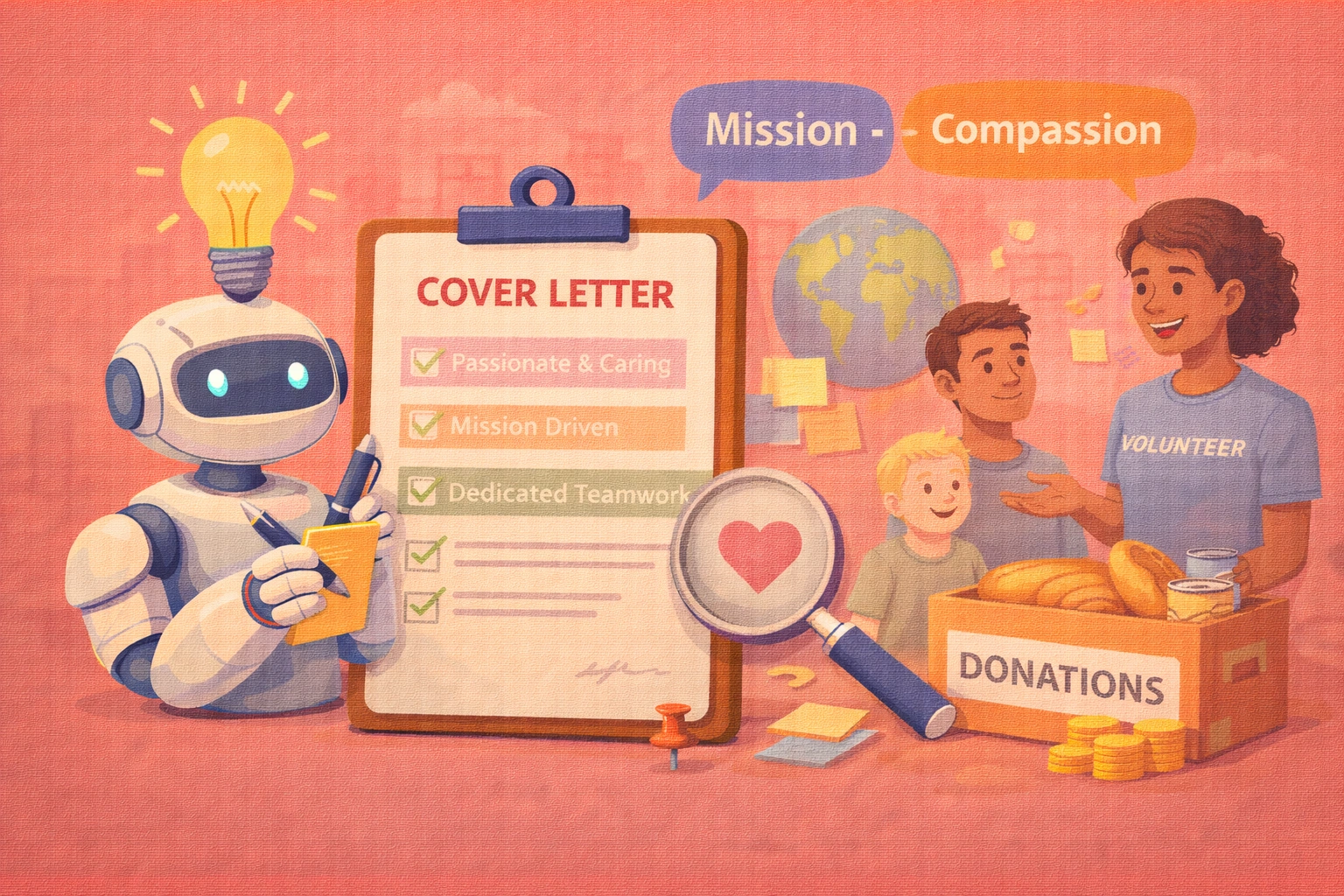
TL;DR: Quick Guide to AI Cover Letters for Non-Profit/NGO Roles
Writing a cover letter for non-profit and NGO roles requires demonstrating mission alignment, passion for social impact, and relevant transferable skills. AI tools can help you craft compelling applications, but success depends on infusing your letter with authentic commitment to the cause. This comprehensive guide covers everything from understanding non-profit hiring priorities to optimizing AI-generated content for mission-driven organizations. Learn to balance professional qualifications with genuine purpose, address common challenges like salary expectations and career transitions, and create cover letters that resonate with non-profit hiring managers.
Non-profit hiring managers prioritize candidates who understand their mission deeply and demonstrate long-term commitment to the sector. According to Nonprofit HR's 2026 Employment Practices Survey, 73% of non-profit employers cite 'passion for the mission' as the most important factor in hiring decisions—even above relevant experience. Your AI-generated cover letter must therefore go beyond listing qualifications to showcase genuine connection to the organization's purpose.
Key Takeaways
Mission alignment is paramount: Non-profit hiring managers prioritize candidates who demonstrate authentic commitment to the organization's cause, making generic applications ineffective regardless of qualifications.
Highlight transferable impact: Whether transitioning from corporate or staying in the sector, emphasize how your skills translate into measurable social impact and organizational advancement.
Address the salary conversation strategically: Acknowledge the realities of non-profit compensation while demonstrating that purpose drives your application, not just the paycheck.
Customize for each organization: Generic non-profit cover letters fail because each organization has unique missions, cultures, and priorities that require specific tailoring.
Balance professionalism with passion: The best non-profit cover letters combine business acumen with heartfelt commitment, showing you can advance the mission while maintaining operational excellence.
Introduction: Why Non-Profit Cover Letters Require a Special Approach
The non-profit sector employs over 12.5 million workers in the United States alone, representing the third-largest workforce segment behind retail and manufacturing. Yet despite this massive employment footprint, many job seekers approach non-profit applications with the same strategies they'd use for corporate roles—a critical mistake that often leads to rejection. Non-profit hiring managers operate with different priorities, limited resources, and heightened sensitivity to mission alignment that requires a fundamentally different approach to your cover letter strategy.
The challenge intensifies when using AI tools to generate cover letters. While AI can dramatically accelerate your application process and help structure your cover letter professionally, out-of-the-box AI output often sounds too corporate, too generic, and too focused on personal advancement rather than collective impact. This guide teaches you how to leverage AI efficiently while ensuring your cover letter speaks the language non-profit organizations understand and value.
Whether you're a corporate professional seeking meaningful work, a recent graduate passionate about social change, a career nonprofit professional advancing in the sector, or someone returning to work through mission-driven employment, the principles in this guide will help you craft cover letters that resonate with non-profit decision-makers. By the end, you'll understand exactly how to customize AI output for maximum impact in the non-profit job market.
"The best non-profit candidates don't just want a job—they want to be part of something larger than themselves. That has to come through clearly in every application, starting with the cover letter." — Sarah Mitchell, Executive Director, National Council of Nonprofits
Understanding Non-Profit Hiring Priorities
Before crafting your cover letter, you need to understand what non-profit hiring managers prioritize—and it's quite different from corporate recruitment. While corporations often focus on technical skills, growth potential, and cultural fit, non-profits add layers of evaluation that can make or break your application. Understanding these priorities helps you tailor your AI cover letter effectively.
The Non-Profit Hiring Priority Matrix
Priority Level | Factor | What Hiring Managers Look For | How to Demonstrate |
|---|---|---|---|
Primary | Mission Alignment | Genuine understanding of and commitment to the cause | Specific knowledge of programs, impact, challenges |
Primary | Cultural Fit | Collaborative mindset, adaptability, resourcefulness | Examples of teamwork, wearing multiple hats |
Secondary | Relevant Experience | Skills that transfer to nonprofit context | Achievements framed in terms of impact |
Secondary | Sector Understanding | Knowledge of nonprofit operations and constraints | Awareness of funding models, stakeholder dynamics |
Tertiary | Technical Skills | Job-specific competencies | Quantifiable achievements with context |
Notice that technical skills—often the primary focus of corporate cover letters—rank as tertiary for non-profit roles. This doesn't mean skills don't matter, but rather that they're table stakes. What differentiates candidates is demonstrating the higher-priority factors convincingly. Your cover letter opening should immediately signal mission alignment rather than leading with qualifications.
Common Mistakes in Non-Profit Applications
Understanding what not to do is equally important. Here are the mistakes that immediately signal to hiring managers that you don't understand the sector:
Generic mission statements: Saying you 'want to make a difference' or 'are passionate about helping others' without specificity tells hiring managers nothing about your actual understanding of their work.
Corporate-speak overdose: Using phrases like 'synergize resources,' 'leverage core competencies,' or 'drive stakeholder value' can alienate non-profit readers who associate such language with profit-driven cultures.
Focusing only on what you'll gain: Emphasizing professional development opportunities, career advancement, or skill-building without discussing contribution suggests self-interest over mission commitment.
Ignoring resource realities: Proposing initiatives or approaches that require significant resources without acknowledging budget constraints shows disconnect from nonprofit operations.
Treating all non-profits the same: A cover letter that could work for any non-profit works for none—each organization has distinct culture, approach, and priorities.
How to Adapt AI Output for Non-Profit Culture
AI tools like Cover Letter Copilot can generate solid foundational content, but raw AI output typically requires significant adaptation for non-profit applications. The challenge is that AI models are often trained on corporate-centric content, producing language that sounds professional but culturally misaligned for mission-driven organizations. Here's how to bridge that gap effectively.
The Corporate-to-Nonprofit Translation Framework
Corporate AI Output | Non-Profit Adaptation | Why It Matters |
|---|---|---|
Drove revenue growth of 45% | Expanded program reach by 45%, serving 500 additional families | Shifts focus from money to people served |
Managed team of 12 professionals | Led collaborative team of 12 staff and 25 volunteers | Acknowledges volunteer workforce reality |
Exceeded quarterly targets | Consistently met grant deliverables and reporting requirements | Speaks to funding accountability |
Implemented cost-reduction initiatives | Maximized mission impact within budget constraints | Frames efficiency as mission-serving |
Developed strategic partnerships | Built community coalitions to advance shared goals | Emphasizes collaborative over transactional relationships |
When reviewing AI-generated content, actively look for corporate language patterns and translate them using this framework. The goal isn't to hide business skills—non-profits need operationally competent people—but to frame those skills in mission-relevant terms that resonate with sector insiders.
Adding Mission-Driven Language
Beyond translation, you need to actively inject mission-driven language that AI may not naturally produce. Consider adding phrases like:
'Advancing the organization's mission of...'
'Creating sustainable impact for...'
'Serving our community's most vulnerable members...'
'Strengthening organizational capacity to...'
'Building coalitions that amplify our collective voice...'
'Stewarding donor resources responsibly...'
These phrases signal sector fluency and help your cover letter feel native to the non-profit environment. However, use them authentically—experienced non-profit hiring managers can spot performative language. Each phrase should connect to genuine experience or commitment. Learn more about personalizing AI output with authentic anecdotes to strengthen your letter.
Demonstrating Mission Alignment: The Most Critical Element
Mission alignment is the single most important factor in non-profit hiring, yet it's also the element most candidates fail to communicate effectively. Generic statements about 'wanting to give back' or 'being passionate about the cause' actually harm your application because they're indistinguishable from other candidates. True mission alignment requires specific, evidenced demonstration.
The Three-Layer Mission Alignment Model
Effective mission demonstration operates on three interconnected layers:
Knowledge Layer: Demonstrating you understand the organization's specific work, approach, and challenges—not just their general cause area.
Experience Layer: Connecting your background to the mission through relevant volunteer work, professional experience, or personal connection.
Vision Layer: Articulating how you see yourself contributing to the organization's future impact and evolution.
Your cover letter should touch all three layers to create a compelling picture of genuine alignment. Here's how each layer manifests in practice:
Layer 1: Demonstrating Knowledge
Show you've done your homework by referencing:
Specific programs the organization runs and their approach
Recent achievements, campaigns, or milestones
Challenges facing the organization or sector
The organization's strategic direction or stated priorities
Key staff, board members, or organizational leaders (appropriately)
Example: Instead of: 'I'm passionate about education equity.' Write: 'Your Literacy Bridges program's approach of embedding tutors directly in under-resourced schools—rather than requiring families to travel to external sites—demonstrates exactly the kind of community-centered thinking I want to support. I was particularly struck by your 2023 impact report showing 94% reading level improvements among participating students.'
Layer 2: Demonstrating Experience
Connect your background to the mission through concrete examples. This is where adding measurable achievements becomes crucial—but frame those achievements in mission-relevant terms:
Professional experience: 'In my corporate marketing role, I developed skills in donor communication by managing customer relationship programs reaching 50,000 stakeholders—experience directly applicable to your development team's work.'
Volunteer work: 'My three years volunteering with Habitat for Humanity, including leading build days for 15 homes, showed me the transformative power of housing security—the very impact your organization creates at scale.'
Personal connection: 'As a first-generation college student who benefited from scholarship support, I understand firsthand the life-changing impact of educational access programs like yours.'
Layer 3: Articulating Vision
Show you're thinking about future contribution, not just current fit:
Example: 'Looking ahead, I'm excited about the potential to apply my data analysis skills to enhance your program evaluation capacity—helping you demonstrate impact to funders while identifying opportunities to deepen community outcomes. I see this role as a foundation for long-term contribution to environmental justice work.'
Addressing the Salary Conversation in Non-Profit Applications
One of the most delicate aspects of non-profit applications is addressing compensation expectations. Non-profit salaries typically run 15-30% below comparable corporate roles, and hiring managers are acutely aware that some candidates will leave once they secure higher-paying opportunities. Your cover letter must address this reality while maintaining professionalism. This is especially important when writing a career change cover letter from the corporate sector.
Strategies for Addressing Compensation
Approach | When to Use | Example Language |
|---|---|---|
Direct acknowledgment | When taking significant pay cut from corporate | I understand and accept that non-profit compensation differs from the corporate sector—my motivation comes from meaningful impact, not maximizing income. |
Values-first framing | General applications | What draws me to this opportunity is the chance to align my professional work with my personal values, contributing to lasting community change. |
Long-term commitment signal | When hiring manager may worry about retention | I'm seeking a career home in the environmental sector, not a stepping stone. This role aligns with my five-year plan to deepen my impact in climate advocacy. |
Sector transition clarity | For career changers | After 10 years in corporate finance, I'm ready to apply my skills where they create social rather than shareholder value. |
The key is addressing compensation indirectly by emphasizing what does motivate you. Avoid explicit salary discussions in cover letters—save those for later interview stages. Instead, focus on demonstrating that your motivation is purpose-driven and sustainable.
"When I see a candidate from corporate acknowledge our salary realities while demonstrating genuine commitment, it actually strengthens their application. It shows self-awareness and honest motivation." — Marcus Thompson, HR Director, American Red Cross Regional Chapter
Tailoring for Different Non-Profit Types
Non-profits vary enormously in culture, operations, and expectations. A cover letter that resonates with a grassroots advocacy organization will fall flat at a large institutional foundation, and vice versa. Understanding these differences helps you customize effectively for each application.
Non-Profit Organization Type Comparison
Organization Type | Cultural Characteristics | Cover Letter Emphasis |
|---|---|---|
Large established NGOs (Red Cross, UNICEF) | Professional, structured, process-oriented | Emphasize experience with complex systems, stakeholder management, global perspective |
Community-based organizations | Grassroots, relationship-focused, resource-constrained | Highlight community connections, flexibility, ability to do more with less |
Private foundations | Analytical, strategic, measurement-focused | Focus on evaluation skills, strategic thinking, understanding of philanthropy |
Advocacy organizations | Passionate, campaign-oriented, politically aware | Show advocacy experience, coalition-building, communications skills |
Social enterprises | Business-minded, innovation-focused, hybrid culture | Balance business skills with social mission, comfort with revenue generation |
Research/policy organizations | Academic, evidence-based, thought leadership | Emphasize research skills, writing ability, policy expertise |
When applying to a specific organization, research where they fall on these dimensions. Read their job descriptions carefully for cultural cues, and adapt your tone and emphasis accordingly.
Regional and International Considerations
For international NGOs (INGOs), additional considerations apply:
Cultural competency: Demonstrate understanding of working across cultures and contexts
Field experience: Highlight any work in challenging or resource-limited environments
Language skills: Mention relevant language abilities for target regions
Development sector knowledge: Show familiarity with international development frameworks and funders
Sector-Specific Considerations by Cause Area
Beyond organizational type, different cause areas have distinct cultures and expectations. Here's how to adapt your cover letter for major non-profit sectors:
Education and Youth Development
Education non-profits value:
Experience working directly with young people or families
Understanding of educational equity and systemic barriers
Data literacy for measuring learning outcomes
Cultural responsiveness and trauma-informed approaches
Key phrases: 'supporting student success,' 'closing opportunity gaps,' 'family engagement,' 'evidence-based programming'
Healthcare and Human Services
These organizations prioritize:
Client-centered service delivery experience
Understanding of healthcare systems and barriers to access
Compliance and regulatory awareness
Cultural humility and trauma-informed care knowledge
Key phrases: 'health equity,' 'client-centered care,' 'social determinants of health,' 'wraparound services'
Environmental and Conservation
Environmental organizations look for:
Scientific literacy and understanding of environmental issues
Experience with policy advocacy or community organizing
Ability to communicate complex issues accessibly
Understanding of environmental justice dimensions
Key phrases: 'climate resilience,' 'environmental justice,' 'conservation science,' 'sustainable solutions'
Arts and Culture
Arts organizations value:
Understanding of artistic practice and creative process
Audience development and community engagement experience
Grant writing and fundraising familiarity
Appreciation for diversity in artistic expression
Key phrases: 'artistic excellence,' 'community access,' 'cultural equity,' 'creative expression'
Adapting Your Cover Letter for Common Non-Profit Roles
Different functions within non-profits require different emphases. Here's how to adapt your cover letter based on the role type:
Development/Fundraising Roles
For fundraising positions, emphasize:
Relationship-building and donor stewardship experience
Understanding of fundraising ethics and donor psychology
Track record of meeting or exceeding revenue goals
Grant writing and foundation relations experience
Database management and data-driven decision making
Sample achievement: 'Led annual fund campaign that exceeded $500,000 goal by 15% while improving donor retention from 58% to 72%—sustainable growth that strengthens long-term organizational capacity.'
Program/Direct Service Roles
For program roles, highlight:
Direct experience with target populations
Program design and evaluation capabilities
Cultural competency and relationship-building skills
Understanding of evidence-based practices
Ability to balance fidelity with flexibility
This is particularly relevant if you're transitioning into a new field and need to demonstrate transferable skills.
Communications/Marketing Roles
For communications positions, emphasize:
Storytelling skills that elevate client/community voice
Multi-channel communication experience
Understanding of nonprofit messaging constraints
Crisis communications and reputation management
Advocacy and policy communications experience
Operations/Administrative Roles
For operations roles, highlight:
Experience maximizing impact with limited resources
Process improvement and efficiency mindset
Compliance and risk management awareness
Technology implementation for organizational effectiveness
Support for programmatic and development functions
Career Transition Strategies: Moving Into Non-Profit Work
Many non-profit applicants are transitioning from other sectors, and this transition requires strategic positioning. Your cover letter must address the natural questions hiring managers have about career changers while demonstrating relevant value.
From Corporate to Non-Profit
Corporate-to-nonprofit transitions are common but require careful framing. Hiring managers worry about:
Salary expectations that don't match non-profit reality
Adjustment to different pace and resource levels
Potential culture shock and quick departure
Approach that's too profit-focused
Treating the non-profit as a resume-builder
How to address these concerns: 'After a decade building marketing programs at Fortune 500 companies, I'm ready to apply these skills where they create community impact rather than shareholder value. I understand this transition means adjusting to different resources and timelines—skills I'm eager to develop. My volunteer work with local food banks over the past three years has already shown me the different rhythm of nonprofit work, and I find it deeply rewarding.'
From Government to Non-Profit
Government experience often transfers well, but address potential concerns about:
Bureaucratic mindset that may feel slow or rigid
Adjustment to less formal hierarchy
Experience with different accountability structures
Fresh Graduates and Early Career
For those entering the workforce through non-profit roles, emphasize:
Relevant internships, volunteer work, and campus involvement
Academic preparation related to the cause area
Fresh perspective and energy you bring
Willingness to learn and grow with the organization
Using AI Tools Effectively for Non-Profit Applications
AI cover letter tools like Cover Letter Copilot can accelerate your application process significantly, but using them effectively for non-profit roles requires specific strategies. Here's how to maximize AI assistance while maintaining the authentic, mission-driven voice non-profits expect.
Step 1: Prepare Mission-Specific Inputs
Before using any AI tool, gather:
The organization's mission statement and values
Specific programs or initiatives that resonate with you
Recent news, achievements, or challenges they've faced
The job description with key responsibilities highlighted
Your relevant experience framed in mission terms
The more specific your inputs, the better the AI output. Generic inputs produce generic cover letters—exactly what you need to avoid. Learn more about using job descriptions to prompt AI effectively.
Step 2: Review and Revise for Sector Fit
After generating initial content, review for:
Corporate language that needs translation: Replace profit-focused terms with impact-focused alternatives
Generic statements: Add specific organizational knowledge and personal connection
Self-focused framing: Shift emphasis from what you'll gain to what you'll contribute
Missing mission alignment: Ensure clear connection between your experience and their work
Use the editing techniques for removing generic phrases to refine AI output for authenticity.
Step 3: Add Personal Touch
AI can provide structure and polish, but personal elements must come from you:
Your specific connection to the cause
Personal anecdotes that demonstrate commitment
Vision for your contribution to the organization
Authentic enthusiasm that doesn't sound templated
Example: Non-Profit Cover Letter with Annotations
Let's examine a strong non-profit cover letter with annotations explaining what works. This example is for a Program Manager position at an environmental education organization:
Opening Paragraph (Mission Alignment): 'When I attended Green Future's Climate Action Summit last year, I was struck by how your educators translated complex climate science into actionable steps that even elementary students could understand and implement. That moment crystallized what I'd been seeking: an organization that combines scientific rigor with accessible community education. I'm writing to express my strong interest in the Program Manager position, bringing eight years of environmental education experience and a deep commitment to climate literacy.'
[Annotation: Opens with specific organizational knowledge (attended their event), demonstrates understanding of their approach (scientific rigor + accessibility), and establishes relevant experience and mission alignment immediately.]
Experience Paragraph (Impact Framing): 'At the City Nature Conservancy, I developed and led our Youth Climate Leaders program, growing participation from 45 to 280 students across 12 schools while achieving 92% curriculum completion rates. More importantly, participant surveys showed 78% of students took environmental action at home—translating classroom learning into family and community impact. I designed evaluation tools that helped us demonstrate program effectiveness to funders, contributing to a successful $250,000 grant renewal.'
[Annotation: Presents achievements with quantifiable impact (participation growth, completion rates) but extends beyond numbers to meaningful outcomes (home action). Shows understanding of funding realities by mentioning grant support.]
Skills Paragraph (Relevant Transfer): 'This role's emphasis on partnership development aligns with my experience building collaborations with school districts, community centers, and corporate sponsors. At CNC, I cultivated relationships with 15 school principals and 8 community partners, resulting in sustainable program placements that didn't rely on continued outreach. I'm particularly drawn to Green Future's corporate engagement approach—I believe my background bridging nonprofit and business worlds could strengthen these partnerships.'
[Annotation: Connects specific skills to job requirements, shows understanding of sustainability in partnerships, and identifies unique value (corporate engagement experience) with appropriate humility.]
Closing Paragraph (Vision + Call to Action): 'I'm excited about the opportunity to contribute to Green Future's expansion into underserved communities—work that aligns with my commitment to environmental justice. I believe effective environmental education should reach everyone, not just those with existing access to nature programming. I would welcome the opportunity to discuss how my experience could support your team's impact. Thank you for considering my application.'
[Annotation: Articulates vision aligned with organizational priorities, demonstrates awareness of equity dimensions, and closes with professional gratitude. Uses confident but collaborative tone throughout.]
Frequently Asked Questions
How do I demonstrate mission commitment if I'm new to the sector?
Even without professional non-profit experience, you can demonstrate commitment through volunteer work, personal connection to the cause, academic study, or board service. Focus on what drew you to this specific mission and how you've already engaged with the issue area. A strong personal story often resonates more than years of sector experience. Consider how to write a cover letter with limited experience for more strategies.
Should I mention salary expectations in my cover letter?
Generally, no. Unless the job posting specifically requests salary history or expectations, avoid mentioning compensation in your cover letter. If you're transitioning from a higher-paying sector, you can subtly signal awareness of non-profit compensation norms by emphasizing purpose-driven motivation, but explicit salary discussion is best reserved for later interview stages.
How long should a non-profit cover letter be?
Aim for one page, approximately 350-450 words. Non-profit hiring managers are often stretched thin and appreciate concise, focused applications. Every sentence should add value—remove generic statements in favor of specific, mission-relevant content. See our guide on cover letter length best practices for detailed guidance.
Do I need to address my cover letter to a specific person?
Whenever possible, yes. Research to find the hiring manager's name and title. For non-profits, this often shows initiative that's valued in the sector. If you truly cannot find a name, 'Dear Hiring Committee' or 'Dear [Department] Team' is preferable to generic options. Our guide on cover letter addressing offers more alternatives.
How do I handle a cover letter for volunteer-to-staff transitions?
If you're applying to an organization where you've volunteered, leverage that insider knowledge. Reference specific experiences, relationships, and organizational understanding that only a volunteer would have. Emphasize your continued commitment now in a professional capacity, and acknowledge the transition from unpaid to paid service naturally.
Should I mention I'm willing to work for less money?
Avoid explicit statements about accepting lower pay, as this can come across as desperate or suggest you undervalue yourself. Instead, demonstrate that purpose drives you by emphasizing mission alignment and intrinsic motivation. Let compensation discussions happen in appropriate interview stages.
How specific should I be about the organization's work?
Very specific. Generic statements about 'wanting to help the environment' or 'caring about education' won't distinguish you. Reference specific programs, recent achievements, strategic priorities, or organizational approaches that demonstrate genuine research and interest. The more specific, the more compelling.
Can AI help me research non-profit organizations?
AI can help you identify key information from organizational websites, annual reports, and public materials. However, don't rely solely on AI for research—personally visit the organization's website, read their annual reports, follow their social media, and understand their specific approach. AI research should supplement, not replace, personal investigation.
How do I handle gaps in my resume related to caregiving or personal matters?
Non-profits often understand life circumstances better than corporate employers. You can briefly address gaps in your cover letter if relevant, particularly if your gap involved volunteer work, caregiving that connects to the mission, or personal experiences that deepened your commitment to the cause. Frame gaps honestly but focus quickly on current readiness.
What if I'm overqualified for the position?
Address this directly by explaining why the role genuinely interests you despite appearing 'below' your experience level. Perhaps you're seeking work-life balance, transitioning sectors, or specifically drawn to this organization. Acknowledge the perception while demonstrating authentic interest and commitment to the specific role and mission.
How should I follow up after submitting my application?
Wait at least one week before following up, then send a brief, professional email reiterating interest. Non-profit hiring processes often move slowly due to limited HR resources, so patience is important. A polite follow-up shows continued interest without being pushy.
Is it appropriate to mention personal experience with the organization's cause?
Yes, when done thoughtfully. Personal connection to the mission—whether as a former client, family member of someone served, or personal beneficiary—can powerfully demonstrate commitment. However, ensure you frame this appropriately, focusing on how it informs your professional contribution rather than making the cover letter about personal therapy or processing.
Conclusion: Crafting Cover Letters That Open Non-Profit Doors
Writing effective cover letters for non-profit and NGO roles requires a fundamentally different approach than corporate applications. Mission alignment trumps credentials, authentic passion outweighs polished language, and demonstrated sector understanding distinguishes serious candidates from casual applicants. By combining AI efficiency with strategic customization—using the frameworks, translations, and examples in this guide—you can create cover letters that resonate with non-profit hiring managers and open doors to meaningful work.
Remember that non-profit hiring managers are looking for future colleagues who will advance their mission, steward resources responsibly, and contribute to a collaborative culture. Your cover letter is the first evidence of whether you can do all three. Take time to research each organization, translate your experience into mission-relevant terms, and demonstrate the authentic commitment that sets successful non-profit candidates apart.
Ready to create your non-profit cover letter? Use Cover Letter Copilot to generate a strong foundation, then apply the adaptation strategies in this guide to ensure your letter speaks the language of mission-driven organizations. With the right approach, your next cover letter could be the key to work that truly matters.
"The non-profit sector doesn't just want your skills—it wants your heart. The best candidates let that show in every word they write." — Dr. Jennifer Kim, Director of Non-Profit Management, Columbia University
Related Resources
Continue developing your cover letter skills with these related guides:
How to Create a Cover Letter: Complete Guide — Master the fundamentals of cover letter creation
Career Change Cover Letter Strategies — Transition sectors successfully
Adding Measurable Achievements to AI Cover Letters — Quantify your impact effectively
How to Personalize AI Output with Anecdotes — Add authentic personal stories
Best Opening Lines for Cover Letters — Start strong with compelling hooks
How to Structure a Cover Letter — Organize your content effectively
Cover Letter Formatting Guide — Professional presentation standards
Avoiding AI Cover Letter Mistakes — Sidestep common errors
Last reviewed: September 2026